How a materials discovery during research after Fukushima led the Herl Tech founder toward a different way of producing hydrogen, and dependable local electricity.
THE FOUNDER BEHIND HERL TECH
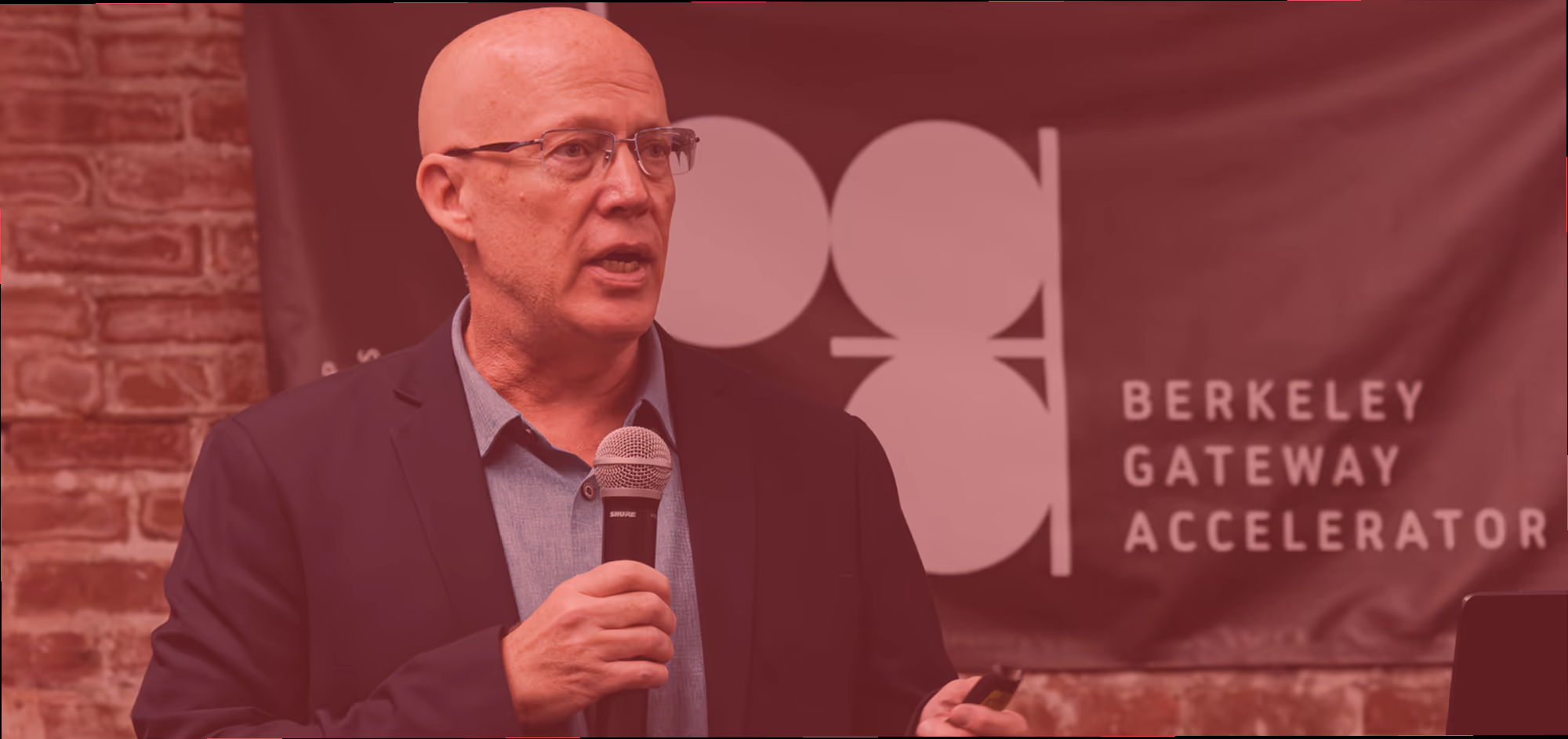
Michael McNeely went to Japan to help detect radioactive contamination. While testing how radiation passed through different materials, he noticed something that would lead him toward an entirely different problem: how to produce dependable power.
Today, Michael is pursuing that possibility as founder and CEO of Herl Tech. The company, part of BGA’s second cohort, is developing a system that would use energy from radioactive decay to produce hydrogen from water. That hydrogen could then be converted into electricity, giving facilities such as hospitals and remote infrastructure a dependable source of power on site.
The ambition connects to his earlier work. Michael’s background is in materials science, and his two previous companies applied materials discoveries to life sciences. The most recent developed a way to separate plasma from blood using a disposable plastic device, so medical testing could happen beyond a central laboratory. Bringing that preparation step closer to the patient could reduce the need to send samples away and wait for results. With Herl Tech, he is pursuing a similar kind of independence in energy, while recognizing that an alternative must offer a practical advantage.
AN UNEXPECTED FIND IN RADIATION RESEARCH
His work in Japan began with a different need. After the Fukushima nuclear disaster, Michael learned how difficult it could be to determine whether people had radioactive contamination inside their bodies. Certain types of radiation could be detected from outside, but alpha particles posed a particular challenge. They can be stopped by something as thin as a sheet of paper; inside the body, tissue stops them before they can reach an external detector.
Michael joined a project investigating whether the particles’ energy could instead trigger a signal that would make contamination easier to detect in urine samples. He spent a year and a half in Japan, working at Tokyo Metropolitan University’s Radioisotope Research Facility. As part of the research, he tested different materials to measure how much radiation could pass through them. He found that some allowed far more alpha particles through than he had expected.
Those measurements led him to consider another possible use for the materials: producing hydrogen from water.
A DIFFERENT ROUTE TO HYDROGEN
Making hydrogen from water requires energy. One way to supply that energy is through radiation. When radiation interacts with water, it can drive chemical reactions that produce hydrogen, a process called radiolysis. Scientists had already studied this process, including the use of alpha particles. As Michael explains, these particles deposit their energy over a short distance and can produce more hydrogen through radiolysis than beta or gamma radiation.
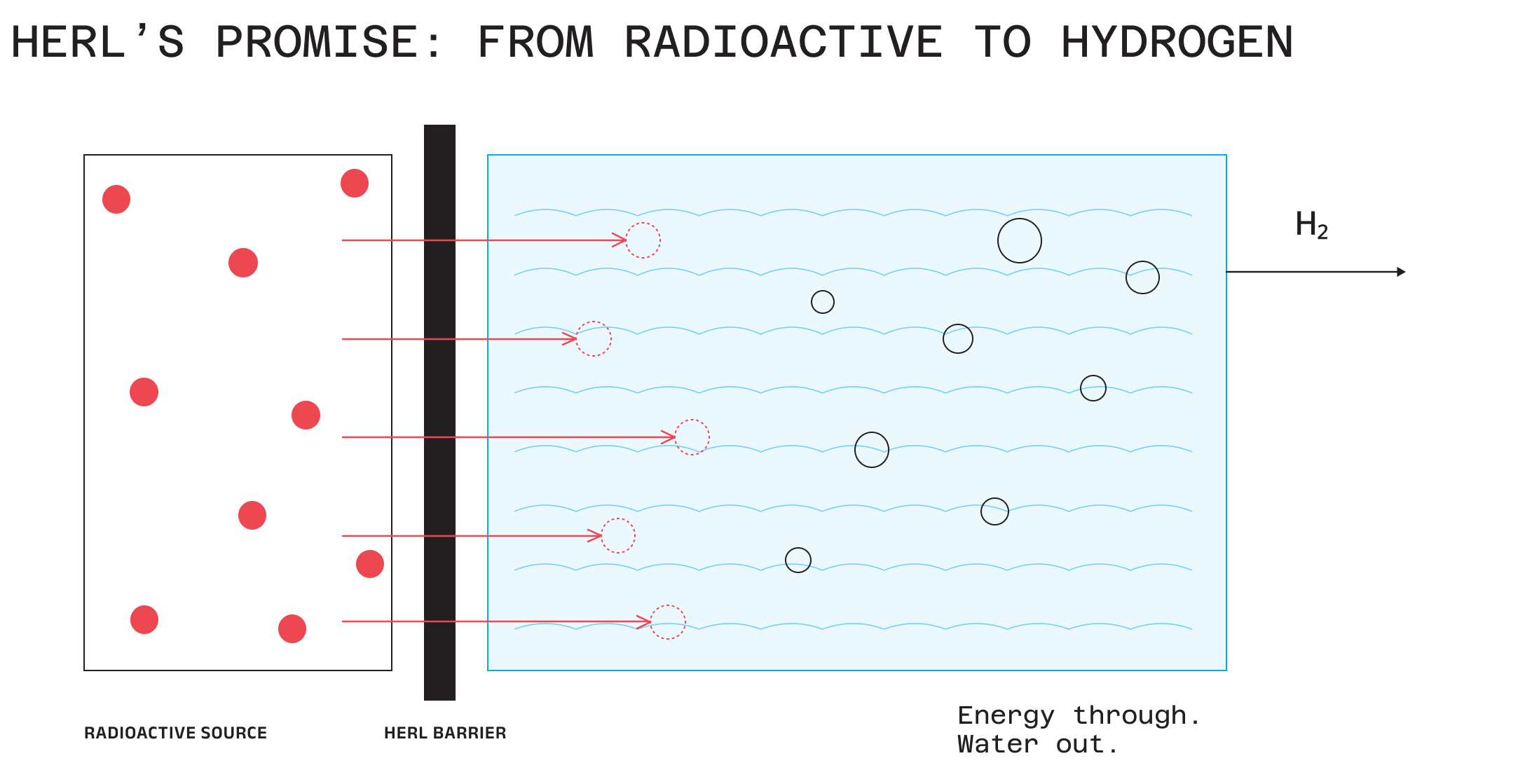
Michael saw an opportunity to build a system around that reaction. But doing so meant solving a physical problem: how could he get the alpha particles into the water while keeping the radioactive material that emitted them separate from it?
The separation matters because water could cause the radioactive source to dissolve or deteriorate. The source also changes chemically as it decays, potentially changing how it reacts with water. A barrier could keep the water away, but alpha particles are so easily stopped that the barrier could also prevent their energy from reaching the water.
This is where Michael’s materials background shaped his thinking. He recognized that the materials he had tested in Japan might do two useful things at once. They allowed unexpectedly high transmission of alpha particles, and they could potentially form a structure that protected a radioactive source from water.
FROM HYDROGEN TO DEPENDABLE POWER
In the system he began considering, the radioactive material would sit on one side of that structure and water on the other. The particles could pass through and release their energy into the water, while the source remained protected. His measurements had suggested a possible way to keep the water out while letting the energy through.
He describes this as “a material science innovation.” Radiolysis was already known; Michael’s contribution was recognizing how particular materials might help turn it into a practical hydrogen-producing system.
“I’m approaching this from a completely different angle,” Michael explains.
The barrier is one part of the design. Another is increasing the amount of hydrogen the system can collect. During radiolysis, reactions can turn its products back into water, reducing the hydrogen recovered. Michael’s proposed High-Efficiency Radiolysis system, or HERL(™), combines the barrier materials with catalysts and controlled water flow to address those losses. The aim is to turn more of the radiation’s energy into usable hydrogen.
Unlike conventional electrolysis, which uses electricity to split water, this proposed system would draw primarily on energy released by radioactive decay. Some electricity would still be needed to operate it, but far less than with electrolysis. The hydrogen produced could then feed a fuel cell or hydrogen turbine to generate electricity, the dependable local power Michael ultimately wants to provide.
Radioactive decay continues regardless of weather or the grid. His ambition is to use it for continuous local generation, with limited maintenance. Producing and using hydrogen in the same place could also reduce the need for deliveries and bulk storage. For a facility that cannot afford an interruption, the potential benefit would be another dependable source of electricity alongside the grid, renewables and storage.
Lower long-term operating costs are a central design goal. Michael also aims to select fuel that decays into stable materials, with the intention of reducing the long-term radioactive waste burden. He envisages initial applications in defense and space, with the longer-term possibility of serving hospitals, industrial sites and communities.
Those ambitions now guide the work of turning the design into a complete system that can be built and tested. Michael brings experience from earlier companies of thinking through manufacturing, durability, maintenance and sales. He is also assembling expertise in radiochemistry, nuclear engineering, regulation and hydrogen applications. BGA is supporting him as he builds the relationships needed to access that expertise, suitable facilities and funding.
“What I want to do is build independent small power delivery systems,” Michael says. For Herl, success would mean a facility being able to keep operating when power elsewhere becomes unavailable. That is the practical benefit he wants the materials science to deliver.
WHAT DOES SUCCESS LOOK LIKE AT SCALE?
HERL aims to be the first hydrogen-production system to deliver more energy in its hydrogen than it uses in electricity.
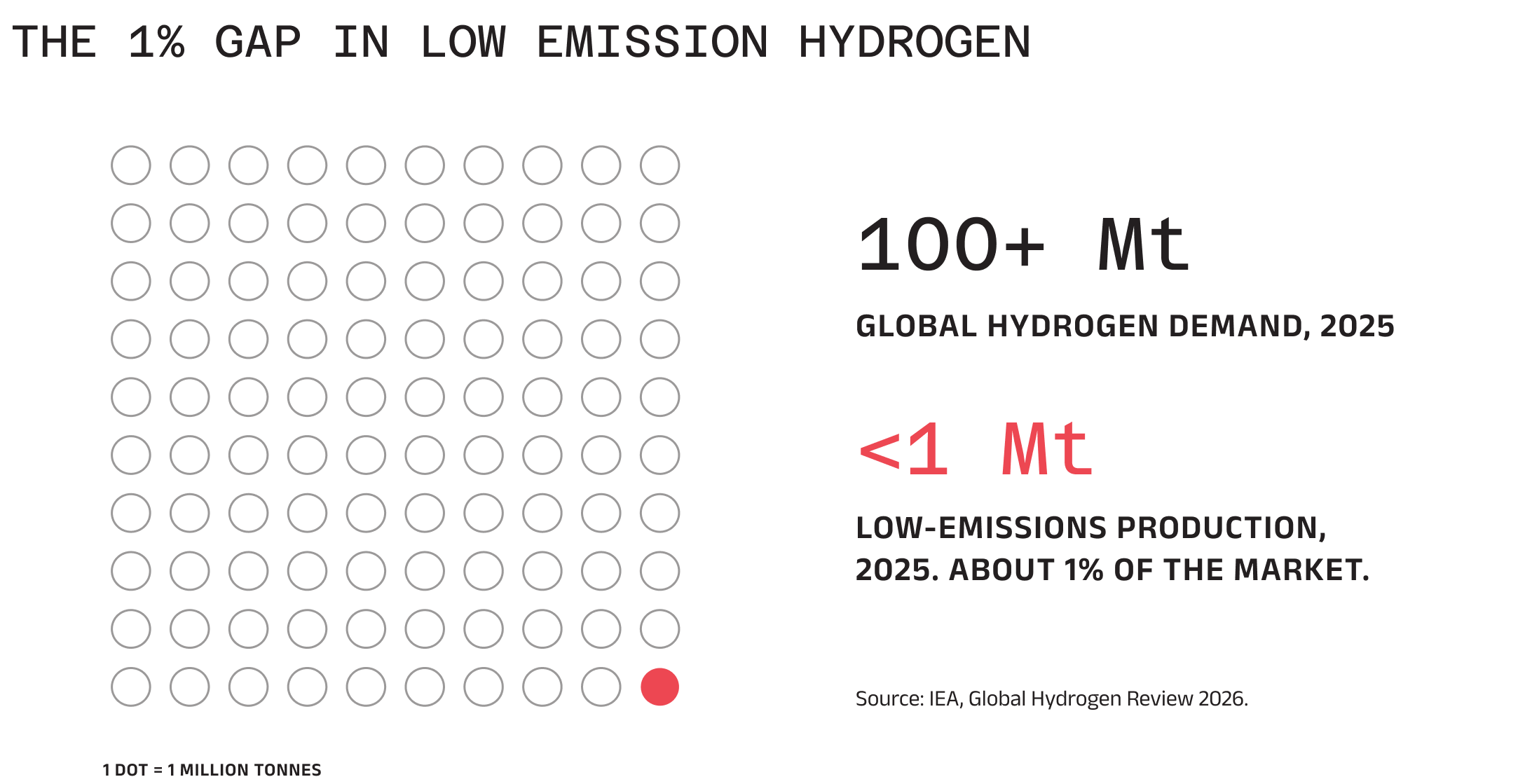
The opportunity spans both hydrogen production and electricity generation. According to the IEA’s Global Hydrogen Review 2026, global hydrogen demand exceeded 100 million metric tons in 2025, yet low-emissions hydrogen accounted for less than 1% of global production. Herl Tech could pursue several revenue paths across these applications: selling hydrogen, electricity, or the systems that produce them.
MICHAEL'S WORK WITH BGA
With BGA’s support, Michael is building the relationships and credibility needed to move HERL from design to testing. His focus is assembling technical advisors, connecting with investors, and gaining access to qualified research facilities.
Unlike his previous company’s prototype, which he built in his garage, HERL requires specialized equipment and trained people. BGA is helping him connect with the expertise and support needed to take that next step.
Media Contact: Berkeley Gateway Accelerator, 2168 Shattuck Avenue, Berkeley, CA 94704, berkeleygateway@futurefrontier.vc